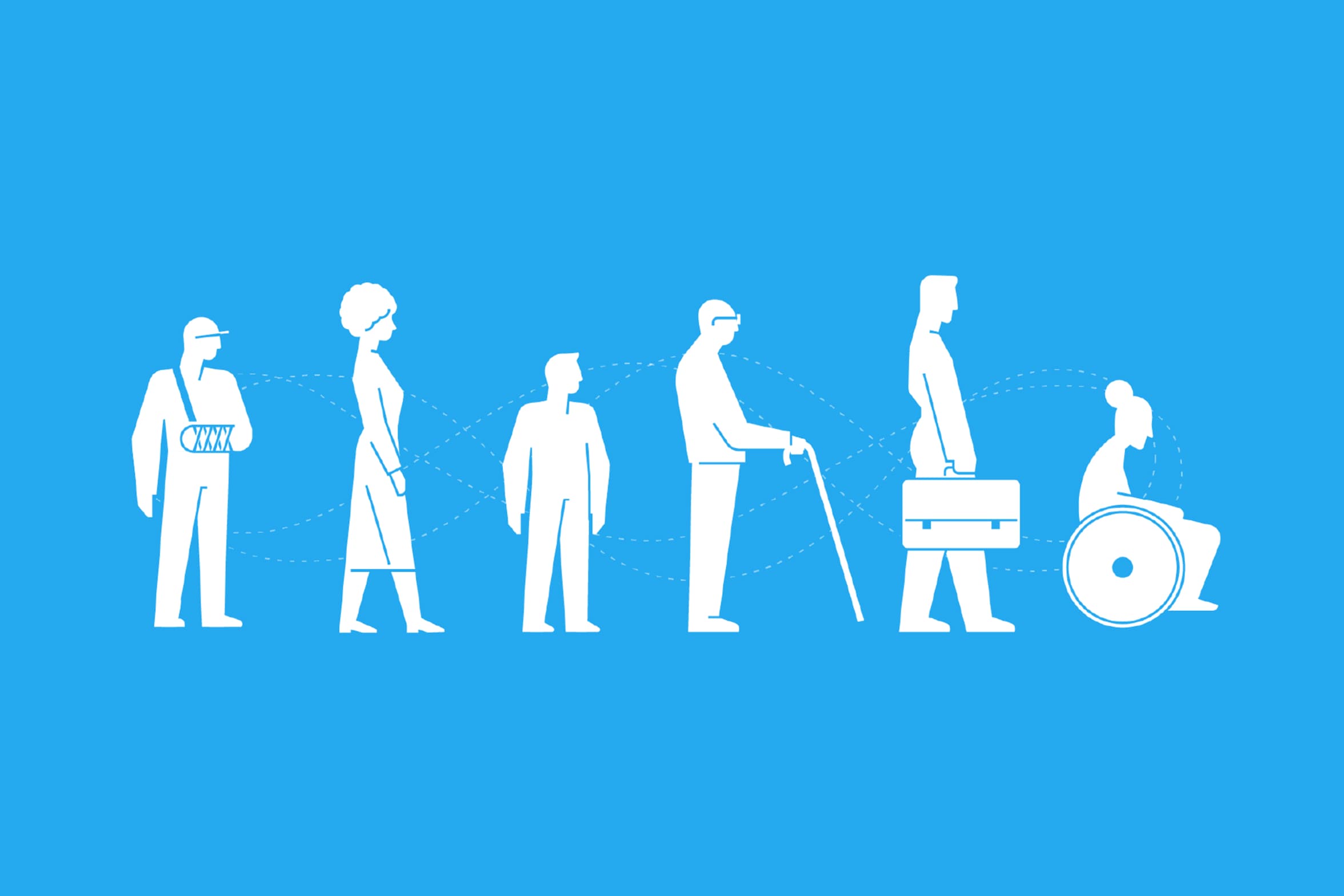
Illustration representing a diverse group of users with varying physical abilities.
Accessibility (abbreviated "a11y") is about making products, websites, and experiences usable by as many people as possible, including people with disabilities. It’s a way of designing so more people can actually use and experience what you make.
When we talk about accessibility, we’re thinking about users who may have vision, hearing, mobility, or cognitive differences. But accessibility is bigger than that. It also includes temporary situations, like a broken arm or being in bright sunlight, and environmental barriers, like poor Wi-Fi or noisy spaces.
Accessible design means people can find what they need, understand it, and use it without unnecessary struggle. It’s about removing friction and barriers so people can complete tasks independently and with dignity, instead of needing workarounds or help.