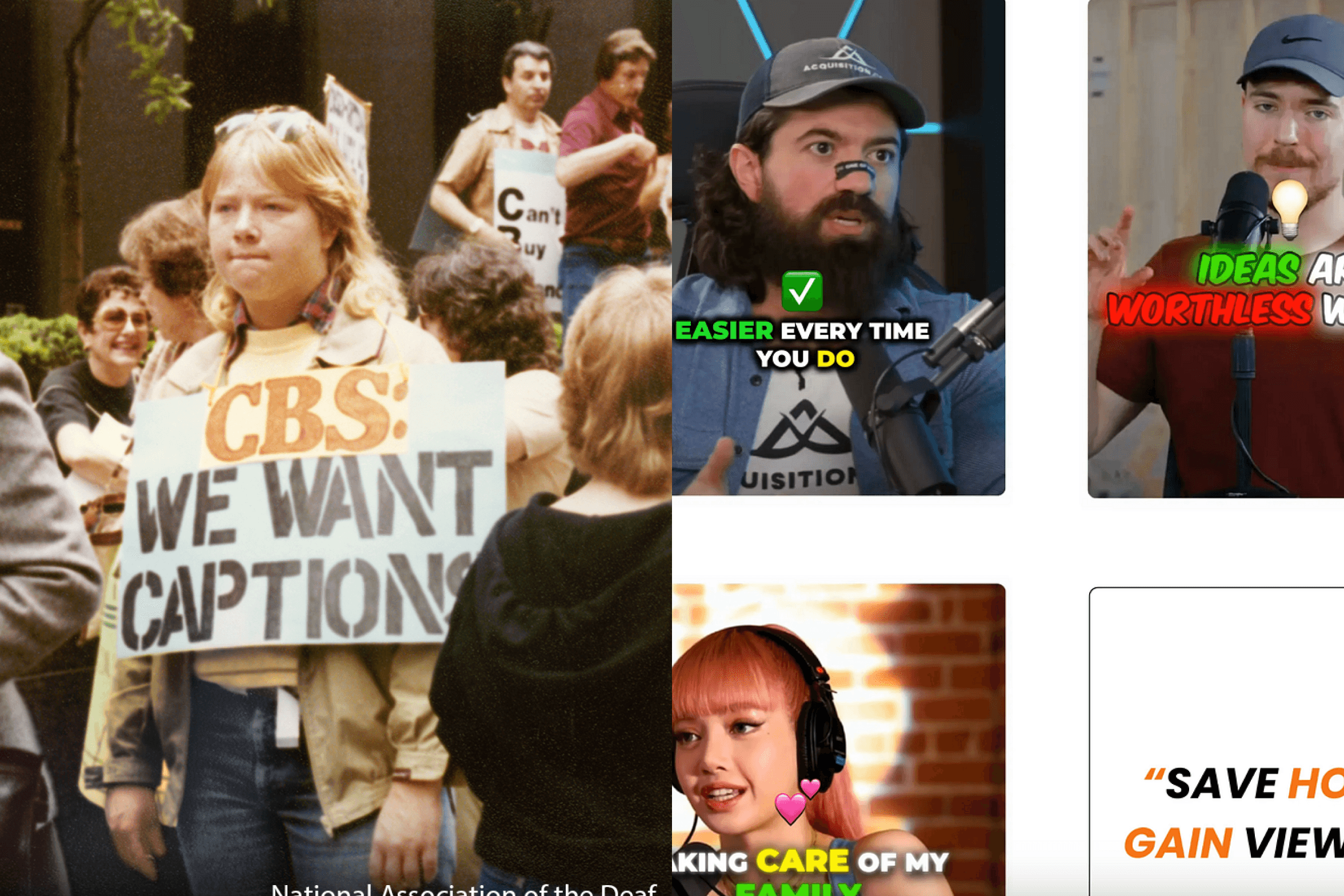
The demand for captions predates the internet, deaf advocates fought for them decades before social media made them standard.
Designing for accessibility helps people with disabilities and makes experiences better for everyone.
This idea has a name: the curb-cut effect. Curb cuts at street corners were originally built for wheelchair users, but they ended up helping parents with strollers, travelers with luggage, and skateboarders too. When you solve for a constraint, you often remove friction for people who never knew they needed it.
The same pattern plays out constantly in digital products:
- Captions were fought for by Deaf activists, but today TikTok and Instagram generate them automatically, and millions of users rely on them in noisy cafés or on silent commutes.
- High-contrast text helps people with low vision, and also anyone reading their phone in bright sunlight.
- Voice input helps people with motor impairments, and also someone cooking with messy hands or driving a car.
Microsoft's Persona Spectrum
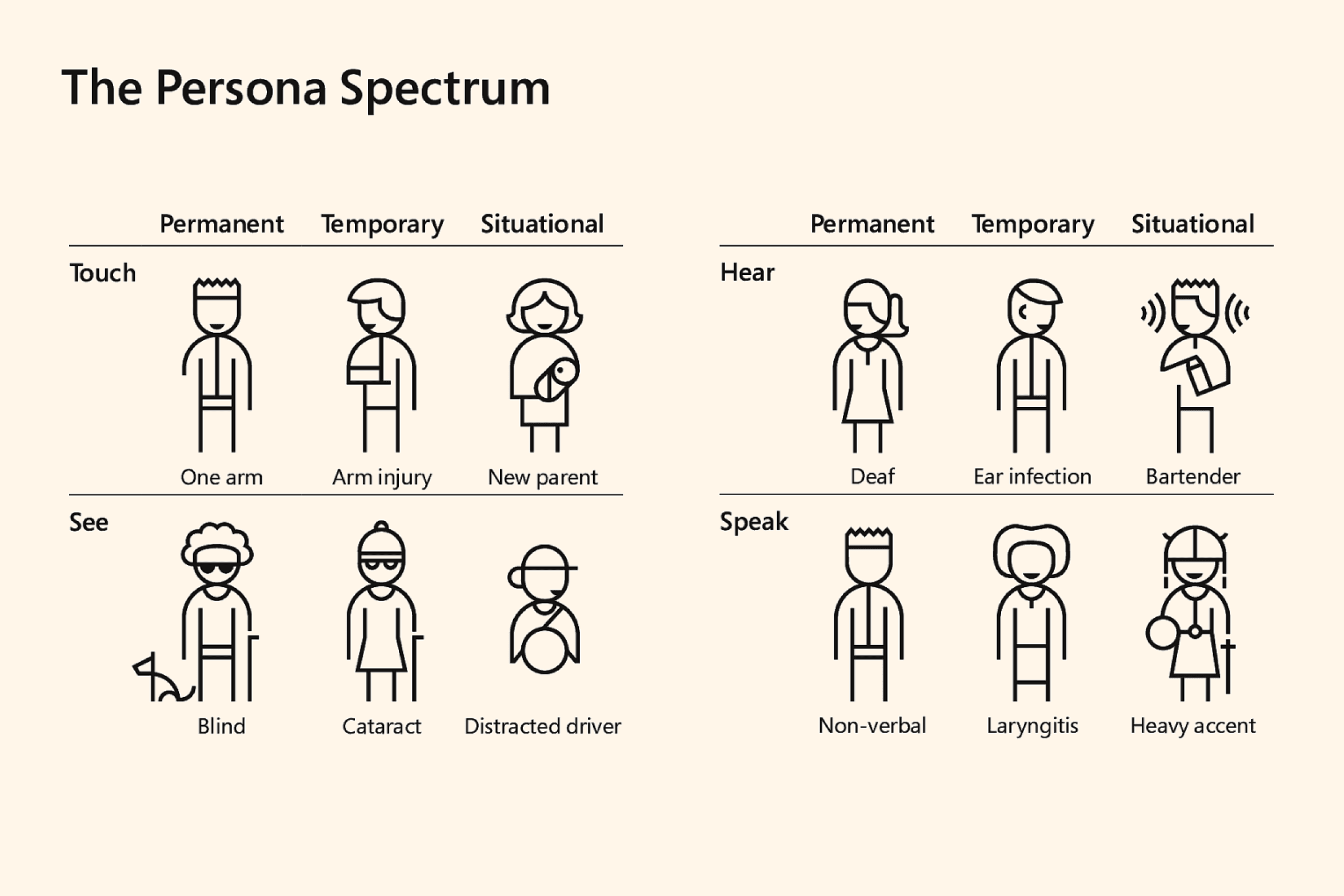
Designing for permanent disabilities benefits everyone
Microsoft's Inclusive Design toolkit formalizes this thinking with the Persona Spectrum: the idea that constraints exist on a scale rather than as a binary:
- Permanent: someone with one arm.
- Temporary: someone with an arm injury.
- Situational: someone holding a baby.
If your design works for someone with a permanent limitation, it will almost always work for people experiencing the temporary or situational version of the same constraint. That makes your product more flexible, more resilient, and more future-proof.
Good accessibility is simply good design. The wider the range of people you design for, the stronger and more durable your work becomes.